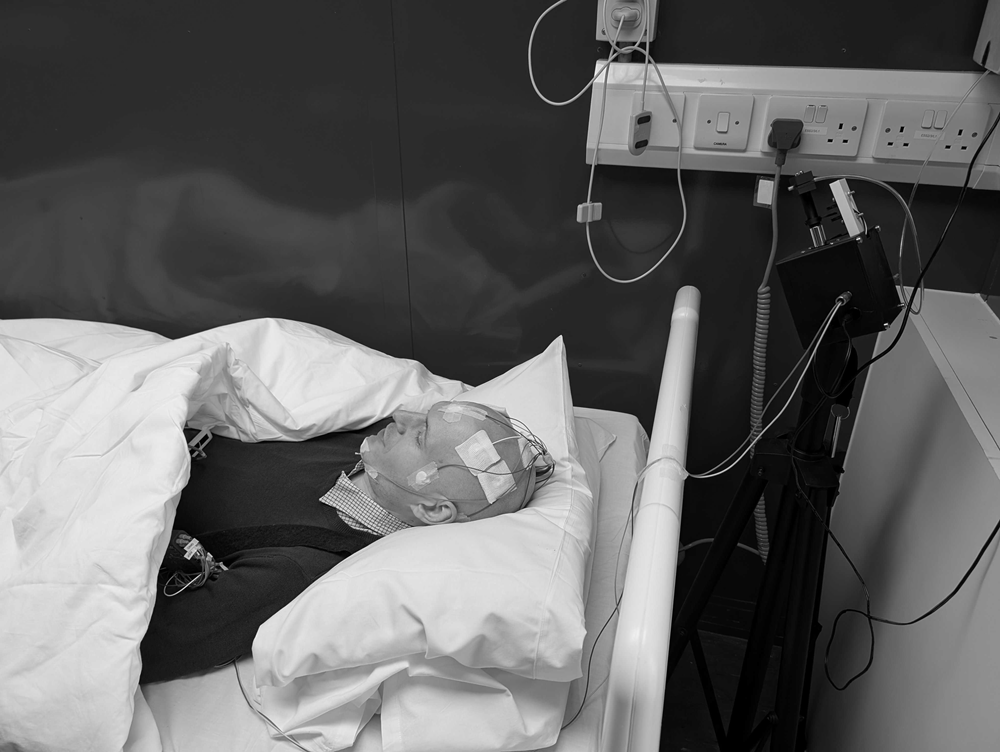
We spend roughly a third of our lives asleep, yet what happens during those hours remains one of biology’s most fascinating puzzles. Far from being a passive state of rest, sleep is a period of intense activity – in our brains, our bodies, and even our hormones. Here are ten weird and wonderful facts about sleep that reveal just how extraordinary this process really is.
Weird and wonderful facts about human sleep
Your brain literally cleans itself while you sleep. One of our favourite weird and wonderful facts about sleep, hands down. During the day, your brain generates metabolic waste products – including a toxic protein called amyloid-beta, which is closely associated with Alzheimer’s disease. At night, a dedicated waste-removal network called the glymphatic system kicks into gear, pumping cerebrospinal fluid through the brain to flush this waste away. Research from the University of Rochester found that this system is almost ten times more active during sleep than during wakefulness, and that brain cells actually shrink by around 60% during sleep to allow the fluid to flow more freely. As lead researcher Maiken Nedergaard put it, the brain must choose between two states: awake and working, or asleep and cleaning (1).
Deep sleep is when your body does most of its growing and repairing. The majority of the body’s daily release of growth hormone, a hormone essential for tissue repair, muscle development, and metabolism, occurs during the earliest stages of deep slow-wave sleep, typically within the first few hours of the night. Research published in Science back in 1969 first established this relationship, demonstrating that when sleep timing is shifted, growth hormone release shifts with it, confirming it is sleep itself – not time of day – that triggers this hormonal surge (2). In other words, cutting short your deep sleep doesn’t just leave you feeling groggy; it can interfere with your body’s fundamental repair processes.
Sleep is when the brain files away your memories. One of sleep’s most critical functions is memory consolidation – the process by which the brain takes experiences from the day and stores them for the long term. During slow-wave sleep, the hippocampus (the brain’s short-term memory hub) replays recently learned information and transfers it to the neocortex for lasting storage. Research in Nature Neuroscience demonstrated that stimulating this synchrony between brain regions during sleep directly improved participants’ recognition memory the following day, providing some of the strongest direct evidence yet that sleep is not just beneficial for memory, but essential to it (3).
That falling sensation as you drift off? Your brain thinks you’re falling out of a tree (maybe). Almost everyone has experienced it: you’re right on the edge of sleep when your whole body suddenly jerks and startles you awake. This is called a hypnic jerk – a brief, involuntary muscle contraction that affects up to 70% of people. One leading theory is that it is an evolutionary relic from our tree-dwelling ancestors: as the body’s muscles begin to relax at sleep onset, the brain may misread this as a sign that you are physically falling, and fires a reflex contraction to “catch” you. Another theory is that the brain is sending a test signal to check whether sleep paralysis, the muscle suppression that prevents us from acting out our dreams, has taken effect yet. Either way, hypnic jerks are completely harmless, though they are more frequent during periods of stress, fatigue, or high caffeine intake (4).
You cannot sneeze while you are asleep. During REM sleep, the stage in which most vivid dreaming occurs, the brain sends signals to suppress voluntary muscle movement, a state known as muscle atonia. This mechanism exists to prevent us from physically acting out our dreams. As a side effect, the reflex arc required for sneezing is also suppressed during this time, making it biologically impossible to sneeze while in REM sleep. Breathing and eye movement are among the very few muscle functions that remain active (5).
Your body temperature drops as a signal that it’s time to sleep. As you prepare for sleep, your core body temperature begins to fall, a process orchestrated by the brain’s hypothalamus as part of the circadian rhythm. This drop helps trigger the release of melatonin and signals to the body that it is time to rest. Research shows that a bedroom that is too warm can interfere with this natural cooling process, disrupting sleep quality. The body temperature continues to fluctuate across the night, with the lowest point typically reached in the early hours of the morning (6).
Your brain replays the day’s experiences in fast-forward. Beyond simple memory storage, the sleeping brain actively replays sequences of neural activity from the waking day — sometimes at speeds up to 20 times faster than the original experience. Studies in rodents first demonstrated this “replay” in the hippocampus during slow-wave sleep, with neurons firing in the same patterns observed during learning, but compressed in time. Subsequent neuroimaging research in humans has confirmed similar reactivation of memory-encoding brain regions during sleep, suggesting the brain uses these quiet hours to rehearse and reinforce what it has learned (7).
Sleep deprivation can impair you as much as alcohol. Research has shown that staying awake for 18 hours produces cognitive impairment equivalent to a blood alcohol level of around 0.05%, and that 24 hours of wakefulness raises this to around 0.08%, at or above the legal drink-drive limit in many countries. This affects reaction time, sustained attention, working memory and decision-making. Crucially, people who are chronically sleep-deprived often significantly underestimate how impaired they actually are (8).
Facts from the animal kingdom
Dolphins sleep with only half their brain at a time. Dolphins face an extraordinary biological challenge — unlike humans, their breathing is not automatic. It requires a conscious decision. To avoid drowning in their sleep, dolphins have evolved a remarkable solution called unihemispheric slow-wave sleep: one hemisphere of the brain enters a sleep state while the other stays fully alert, allowing the animal to continue breathing, swimming, and monitoring its environment for threats. The two hemispheres take turns resting, ensuring each receives roughly equal amounts of sleep over time. EEG recordings of bottlenose dolphins have confirmed this behaviour conclusively, and the same phenomenon has been observed in whales, porpoises, seals, and some migratory birds — an extraordinary example of evolution finding its way around the basic need for rest (9).
Chinstrap penguins sleep over 10,000 times a day – for just four seconds at a time. Nesting in the chaos of an Antarctic breeding colony, surrounded by predatory birds, aggressive neighbours, and 24-hour summer daylight, chinstrap penguins have evolved arguably the most extreme sleep strategy on the planet. A 2023 study published in Science used EEG brain monitors fitted to wild penguins on King George Island and found that the birds nodded off more than 10,000 times per day – over 600 microsleeps an hour – with each bout lasting an average of just four seconds. Remarkably, these snatches of sleep add up to over 11 hours of rest per day, and the penguins were still able to successfully breed and raise chicks, suggesting that the restorative benefits of sleep can accumulate in tiny increments. As study co-leader Paul-Antoine Libourel of the Lyon Neuroscience Research Centre put it, the penguins appear to be in an almost constant state of microsleep – perpetually dozing, perpetually alert (10).
Sleep science continues to reveal just how much is happening beneath the surface of what looks, from the outside, like simple stillness. Whether it’s the brain washing itself clean, the body releasing hormones that repair and grow tissue, or an ocean mammal resting one half of its mind at a time, the biology of sleep is anything but ordinary.
(1) Xie L, et al. Sleep drives metabolite clearance from the adult brain. Science. 2013;342(6156):373–377. doi:10.1126/science.1241224. https://www.urmc.rochester.edu/news/story/to-sleep-perchance-to-clean
(2) Sassin JF, et al. Human growth hormone release: relation to slow-wave sleep and sleep-waking cycles. Science. 1969;165(3892):513–515. doi:10.1126/science.165.3892.513. https://pubmed.ncbi.nlm.nih.gov/4307378/
(3) Geva-Sagiv M, et al. Augmenting hippocampal–prefrontal neuronal synchrony during sleep enhances memory consolidation in humans. Nature Neuroscience. 2023;26:1100–1110. doi:10.1038/s41593-023-01324-5. https://www.nature.com/articles/s41593-023-01324-5
(4) Sleep Foundation. Hypnic Jerks: Why You Twitch When You Sleep. https://www.sleepfoundation.org/parasomnias/hypnic-jerks | American Academy of Sleep Medicine overview via ScienceDirect: https://www.sciencedirect.com/topics/medicine-and-dentistry/hypnic-jerk
(5) National Institute of Neurological Disorders and Stroke. Brain Basics: Understanding Sleep. https://www.ninds.nih.gov/health-information/public-education/brain-basics/brain-basics-understanding-sleep
(6) Sleep Foundation. Myths and Facts About Sleep. https://www.sleepfoundation.org/how-sleep-works/myths-and-facts-about-sleep
(7) Klinzing JG, Niethard N, Born J. Mechanisms of systems memory consolidation during sleep. Nature Neuroscience. 2019;22:1598–1610. doi:10.1038/s41593-019-0467-3. https://www.nature.com/articles/s41593-019-0467-3
(8) Wüst LN, et al. Impact of one night of sleep restriction on sleepiness and cognitive function: a systematic review and meta-analysis. Sleep Medicine Reviews. 2024;76:101940. doi:10.1016/j.smrv.2024.101940. https://pubmed.ncbi.nlm.nih.gov/38759474/
(9) Lyamin OI, et al. Cetacean sleep: an unusual form of mammalian sleep. Neuroscience & Biobehavioral Reviews. 2008;32(8):1451–1484. doi:10.1016/j.neubiorev.2008.05.023. https://pmc.ncbi.nlm.nih.gov/articles/PMC8742503/
(10) Libourel P-A, Lee WY, et al. Nesting chinstrap penguins accrue large quantities of sleep through seconds-long microsleeps. Science. 2023;382(6674):1026–1031. doi:10.1126/science.adh0771. https://pubmed.ncbi.nlm.nih.gov/38033080/