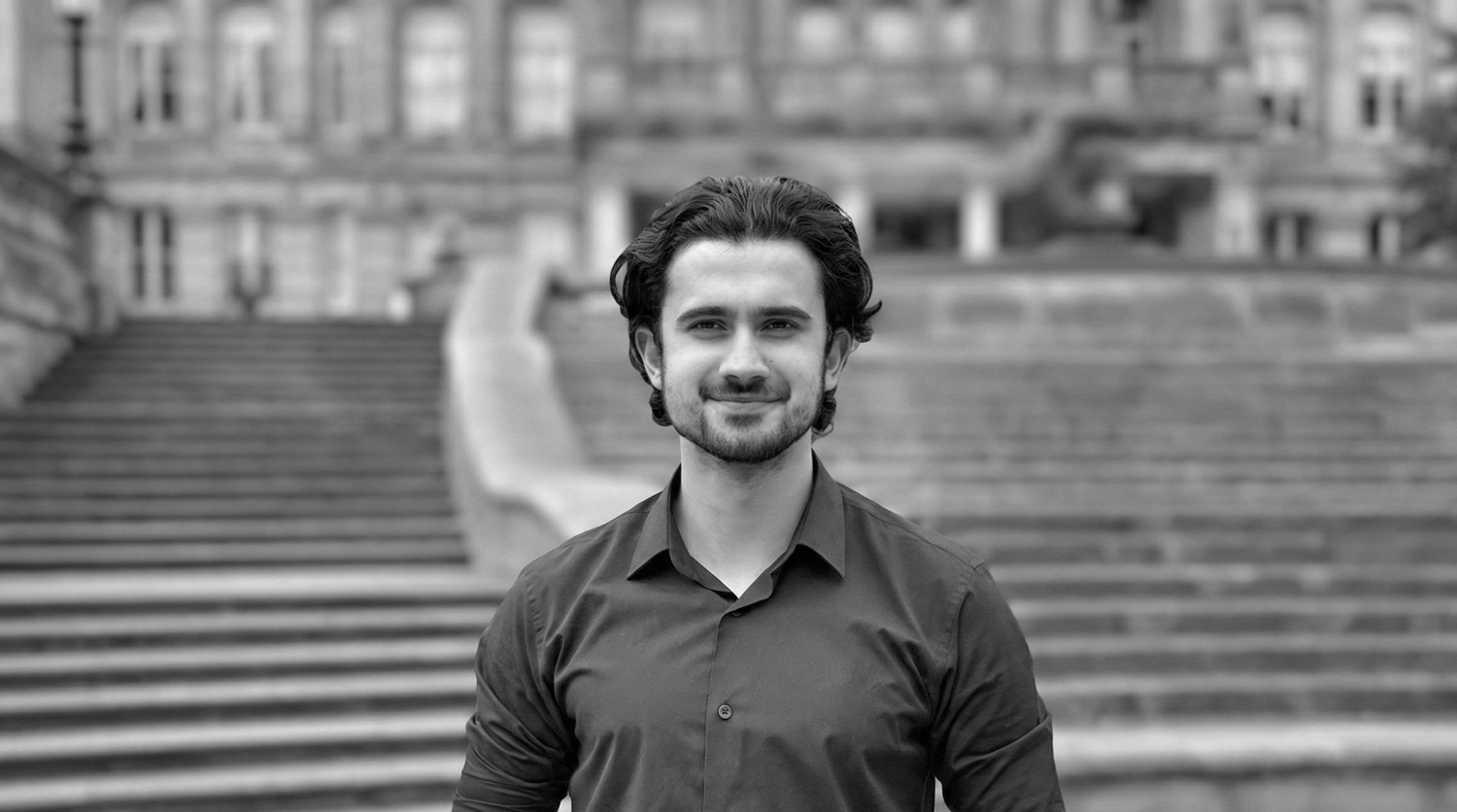
We recently sat down with our colleague Fahad Zia, Hynt’s AI/ML Lead and one of Computing’s Rising Stars 30 for this year. With his innovative work on AI in scent technology, Fahad offers a unique perspective on building a rewarding and exciting career in the rapidly changing field of IT.
Hi Fahad, thanks for taking the time to talk with us today. To start, can you tell us a bit about your current role at Hynt?
Fahad: Sure thing. I’m currently the AI/ML Lead at Hynt—and was actually the company’s first hire in that area. Essentially, anything AI-related comes to me. That includes incorporating AI into existing solutions, shaping our long-term vision for AI, and understanding how that technology can drive the business forward.
My work moves in two main directions. Our priority right now is ML-driven scent and sleep technology. Using data from wearable devices, we assess the user’s current sleep stage and trigger specific scents to enhance sleep quality. Longer term, we’re aiming to add voice-powered and input-directed scent production capabilities. Imagine saying, “Give me a lavender field on a warm summer evening,” and having that olfactory experience generated instantly.
This means researching what’s already out there, staying up to date with the latest developments, analysing data from experiments with our lab partners, and bringing state-of-the-art AI into our sleep-enhancing tech.
Did you always want to go into IT, or did that interest develop later?
Fahad: I’ve always been exposed to the possibilities in this field, coming from the family that I do: my mother teaches and holds an MPhil in Mathematics, and both my father and older brother hold PhDs in Computing, more specifically in AI. So the environment definitely influenced me. I had kept my options open for a while, though. My family would have liked me to go into medicine, but despite pursuing that for a while, I was more inclined towards the IT field and its potential.
I started programming courses after school, creating basic “if-else” workflows and applying to Computer Science programmes when the time came. I had received offers at the time from UCL, the University of Manchester, and New York University. And even though I did not end up at those places, looking back now, all the dots connected perfectly to bring me to where I am today; and my interest in this field has only grown since then.
What did you study, and how did it help shape your career?
Fahad: I studied Computer Science at NUST in Islamabad, and graduated with a Summa cum laude. From early on during the programme, I leaned towards machine learning, taking up elective courses in deep learning and projects in the computer vision space. That technical foundation has helped immensely in my work over the years. I can understand the internal mechanics of systems and get to the root of a problem faster than might otherwise have been possible.
How did you land your first job in IT?
Fahad: It started with missing an on-campus recruitment and catching an interview at their next stop – a 4-hour drive from where I was. I eventually got the role at the company, which is now Pakistan’s largest IT exporter. I then completed various placements in Pakistan, before coming to the UK to work with the University of Wolverhampton on a project to enhance the digital economy by engaging with SMEs and providing consultancy in AI. Alongside this, I was pursuing doctoral research at the University.
Soon after, I moved to BT’s Research and Network Strategy department, where I worked in applied AI across a diverse range of fields – from multi-agent systems and anomaly detection in cybersecurity and network data, to energy conservation at the thousands of operation centres across the UK.
What does a typical day look like in your role now?
Fahad: It’s a mix of learning, experimenting, and building. A typical day would start with a quick read through newsletters to stay up to date. Should I find anything interesting, I’ll go and try out the new tools or techniques. I’ll then review my calendar, plan the day and delve right into the work. The work itself involves the following steps for me: understanding and aligning with the vision behind a project, building an outline of the steps to get there, understanding the gaps, researching and innovating to fill those gaps, creating a detailed proposal of the solution to get stakeholder buy-in, and then getting to the really fun part: building.
What do you enjoy most about working in IT?
Fahad: The sheer number of possibilities. All you really need is a laptop (ideally with tonnes of computing power). I love the blend of creativity and technical skill, and I enjoy seeing the impact of what we build. Over time, I’ve also moved from being purely technical to thinking more holistically. I think you need more than just technical excellence in order to create truly valuable solutions. The technical aspect lays the foundation, but it is only complete with a storyline that ties everything together and aesthetics that appeal to the human eye. That’s something us “technical folk” should definitely pay more attention to.
What has been your biggest professional challenge so far?
Fahad: For me, the biggest challenge has been moving beyond the purely technical aspects of a solution. It’s one thing to build something elegant; it’s another to ensure it fits the broader business, user, and strategic context. A key takeaway from my time at BT was the non-technical skillset that I was able to hone there. I learned to look at things from the stakeholder perspective and understand the business value of the things I built. I learned to present technical solutions to non-technical audiences to ensure that they understood their value. This helped me to engage both customer and stakeholder buy-in for my proposals. These skills continue to serve me well every day.
How do you stay on top of new IT and Tech developments?
Fahad: A combination of regular reading and hands-on experimentation. I subscribe to some newsletters – The RunDown AI and AI Breakfast are two good ones. And of course, actually building things is the best way to learn, so if there is anything that piques my interest, I would take it away and get hands-on to truly understand its potential and applications.
Do you have any advice for someone considering a career in IT?
Fahad: Start with online courses – they’re accessible and a great way to get foundational knowledge. Then keep practising in your own time. Build fun projects with low stakes; it gives you a real serotonin hit when something comes to life.
Also focus on communication: storytelling and translating technical ideas into something anyone can understand. It’s about bringing all stakeholders on board. That skill is underrated but serves you really well in your career.
I’m also a big fan of AI tools like Claude, it feels like the next step in how we reference information, similar to the shift from encyclopedias to Google. And AI coding tools are amazing for structuring workflows and building out your ideas quickly.
Thanks so much for sharing your experiences and insights today—it’s been a pleasure.
Fahad: Thank you! Always happy to talk.